What I Took Home from Reform UK Conference 2026
I’ll be honest. Party conferences have never really been my thing. After 35 years in business, the idea of three days in an exhibition hall listening to speeches didn’t exactly set my pulse racing. This was my first one. I’m glad I went. Not because of the atmosphere, although there was plenty of that, but because of what it told me about where this party is heading. It felt like a party getting ready to govern. Look at the numbers.
Reform arrived in Birmingham a very different outfit from a year ago, I remember watching it. As it was that conference that inspired me to become a member. The parliamentary party has doubled, councillor numbers more than doubled at May’s local elections, and we broke through in both devolved parliaments to become the official opposition in Wales and joint-second largest party in Scotland. I’m one of those new councillors, so I’m hardly neutral on that last point.
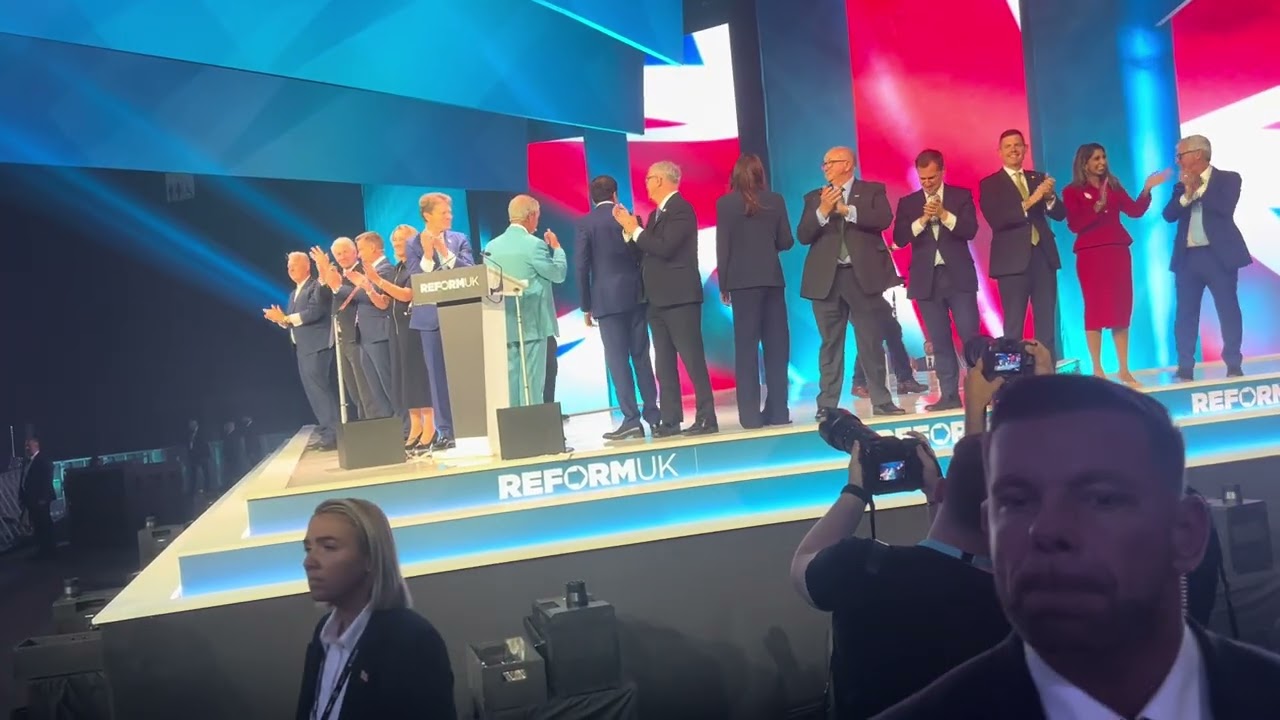
The conference grew to match. The party took a much bigger footprint inside the NEC than last year, with more stands, more vendors and more fringe theatres. Those who’d been before told me earlier conferences had the feel of a rally. This one was built to stand comparison with Labour and the Conservatives.
As a businessman first and a politician second, this was the bit I cared about most. Proceedings opened on Thursday with Reform’s first ever Business Day. The party sold more than six hundred Business Day tickets and doubled commercial ticket sales on 2025, and the attendee list included major FTSE businesses who had previously kept their distance.
Not long ago, big firms wouldn’t be seen in the same postcode as us. Now they’re buying tickets. That tells you where they think the wind is blowing.
Business came to the table

Sed ut mauris turpis. Etiam tortor sapien, vestibulum nec nulla et, malesuada commodo sem. Ut suscipit maximus quam, vel volutpat nibh ultricies eget. Nunc quis mollis dolor, vitae pellentesque ligula. Aliquam pretium porttitor risus, eget lobortis tortor facilisis quis. Curabitur imperdiet leo id purus euismod, faucibus maximus massa sodales. Etiam lobortis varius lobortis. In tempor venenatis mi.

Reform in local government: the grown-ups’ table
For a Norfolk councillor, one session stood out. The Institute for Government hosted a panel with Danny Kruger MP, who heads Reform’s unit preparing the party for government, alongside Reform council leaders from Lancashire, Kent and Calderdale, and the Chief Executive of Norse Group. Norse is Norfolk-owned, so that conversation lands close to home. Reform councils are now running real budgets and real services, and the questions were practical ones: what works, what it costs, and how to deliver it.
The Channel: something no government has managed
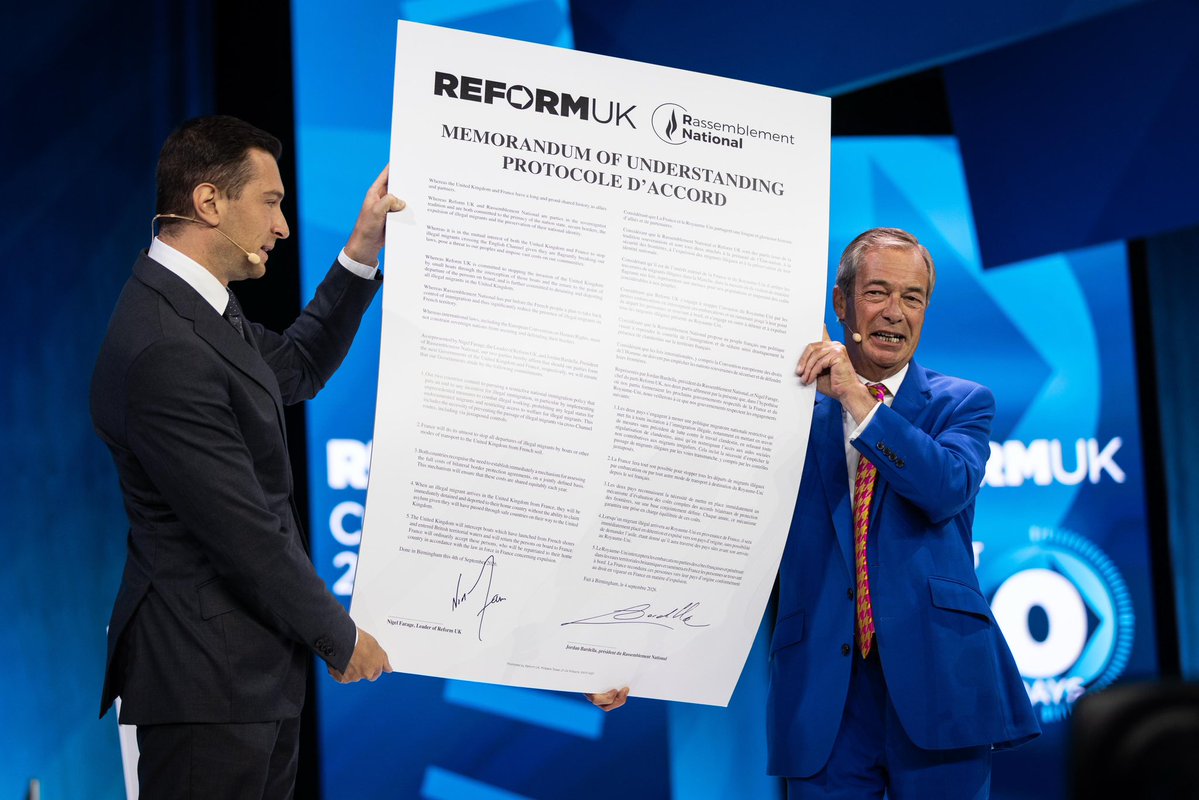
On Friday, Jordan Bardella, President of France’s National Rally, signed a memorandum of understanding with Nigel Farage: a Reform government would intercept boats in British waters and return those aboard to France, while a future RN government would stop France being a gateway for illegal migration to Britain. It’s a commitment from the French side that has eluded several governments in London. Successive Home Secretaries have flown to Paris with a cheque book. We got a signature.

The First 100 Days: the part that matters most
If you remember one thing from this conference, make it this. Reform didn’t just announce policies. It put a clock on them and a name against them.
Here’s what’s on the list. Nigel’s programme for the first 100 days includes declaring a national emergency on immigration, stopping Channel crossings within 100 days, cutting £250 off energy bills, and significant cuts to taxes and the benefits bill. Robert Jenrick added a tax pledge to the list on Saturday, raising the personal allowance to £15,000 within 100 days. Richard Tice set out how he’d get energy bills down: removing carbon taxes on generators and taking VAT off consumer energy bills.
So every major pledge has an owner. Nigel owns the boats. Robert owns your tax bill. Richard owns your energy bill. Everyone knows who to look at if it doesn’t happen.
And if it doesn’t happen?
This is the bit that made me sit up. Nigel pledged that his own cabinet would be sacked if they had not delivered on their pledges within 100 days of taking office.
Read that again. Not “reviewed”. Not “given a stern talking to in a select committee”. Sacked.
Think about what that means for each of them. If the boats are still coming on day 101, the man who put his name to it answers for it. If working people haven’t seen the personal allowance go up, the Chancellor doesn’t get to blame the weather, the Bank of England or the last lot. He’s out. If energy bills haven’t come down, the person who promised it clears their desk.
It doesn’t stop at ministers either. Farage also pledged that civil servants who obstruct Reform policies would be fired and replaced with private sector hires. Anyone who has watched a perfectly sensible decision disappear into Whitehall for eighteen months will understand why that matters.
Now compare that with what we’ve had. How many ministers have missed a target and been rewarded with a new department, a knighthood or a seat in the Lords? In Westminster, failure has been a career move. The only thing guaranteed to get you sacked has been disloyalty to the leader, never letting down the public.
No delivery, you’re out. That’s how business works.
None of this will surprise anyone who has run a company.
When Kick Sportswear grew from £350k to £8m, nobody gave marks for effort. The bank didn’t care about intentions or mission statements. Customers didn’t pay for plans. You either delivered or you didn’t, and the numbers told everyone which.
It’s the same in every boardroom I’ve sat in as a CEO, non-exec or investor.
A sales director who misses target quarter after quarter doesn’t get a promotion.
A CEO who burns through investors’ money without results doesn’t get a second term.
Shareholders don’t accept “it was harder than we thought”. That’s not cruelty. It’s accountability, and it’s why good businesses get better and bad ones get found out.
Politics has run on the opposite principle for decades. Promise big, deliver little, blame someone else, repeat. The 100-day rule simply brings the rules of the real world into government. Set the target in public. Name the owner. Measure it. If it isn't done, change the person.
Some will say 100 days is too tight. I’d say it’s a deadline, and deadlines are what get things done. Every business owner knows that a project with no end date never finishes. Give Whitehall five years and it will take five years. Give it 100 days and a named minister with their job on the line, and you’ll be amazed how quickly the blockers move.
I’ll hold myself to the same standard. My residents in Hingham Division didn’t elect me to attend meetings. They elected me to get things done. If I don’t deliver, they know what to do at the ballot box, and that’s exactly as it should be.
Thank you for trusting me with your vote. I won’t let you down.
Playlist
0:21

0:00